Sometimes, simply getting out of bed in the morning is a battlefield. The mere thought of work, grocery shopping, or social gatherings weighs heavily on your mood and drains your energy before the day has even truly begun. For many people living with depression, moments like these are a daily reality. Even the smallest tasks can feel completely overwhelming. These limitations are real and can be officially recognized: the disability rating (known in Germany as Grad der Behinderung or GdB) makes it visible just how much depression impacts your daily life, opening up pathways to relief and support.
A disability rating is not a stigma; rather, it is a legal entitlement for those affected. This article explains when depression is classified as a disability or a severe disability, how the disability rating is assessed, and what types of assistance are available.
When Does Depression Qualify as a Disability?
Many people affected by depression find that even ordinary daily situations become a major burden—something that can be difficult for outsiders to understand. Simple tasks like getting out of bed, managing the workday, or maintaining social contacts can require an enormous amount of energy. While depression can be officially recognized as a disability, the process is not just about the medical diagnosis itself; it focuses primarily on how severely the illness actually impacts your daily life.
The disability rating is not a label. Instead, it is a legal pathway to make these daily burdens visible and to provide much-needed relief. A disability rating for depression helps secure your employment, allows you to get support in daily life, and offers a bit more financial security. This can include tax relief, special protection and assistance at the workplace, and, if applicable, additional social benefits—such as the option to arrange for more flexible working hours if your capacity to handle stress is severely limited.
Under the German Social Code, Book IX (SGB IX) and the Medical Assessment Ordinance (Versorgungsmedizin-Verordnung - VersMedV), mental illnesses like depression are legally recognized and accounted for in the exact same way as physical conditions. Furthermore, if a depression is recurrent and disrupts your life over a prolonged period, this chronic nature is also taken into account when determining your disability rating.
Ultimately, a certified disability rating for depression provides those affected with crucial protection. It is a tool that offers security and structure, without ever questioning your personal strength or self-worth.
What Is the Difference Between the Four Severity Levels of Depression?
Depression affects every individual differently. Some people experience only mild limitations, while others struggle across nearly all areas of life. To accurately determine a disability rating, depression is therefore categorized based on its severity and its specific impact on daily coping skills:
- Mild depression: Few limitations in daily life.
- Moderate depression: Noticeable impairments, for example, regarding work performance or maintaining social contacts.
- Severe depression: Significant limitations in almost all areas of life.
- Very severe depression: Massive impairments, frequently resulting in a complete inability to work.
This classification of depression is not only vital for your medical diagnosis, but it is also the deciding factor in determining the appropriate disability rating (GdB) and ensuring you receive the proper support
Disability Rating for Depression – An Overview
Just how severely depression limits daily tasks, work performance, and participation in social life determines the specific disability rating issued by the pension office (Versorgungsamt). This disability rating (GdB) can range from 20 to 100, depending on how heavily the condition impacts your day-to-day life. In Germany, a depression is officially classified as a severe disability once a rating of 50 or higher is achieved.
Disability Rating Table for Depression
Mild depression with few limitations in daily life:
- Disability Rating Value (GdB) 10 – 20
Moderate depression with significant limitations in daily life:
- Disability Rating Value (GdB) 30 – 50
Severe depression with significant limitations in all areas of life:
- Disability Rating Value (GdB) 60 – 70
Very severe depression with total inability to work:
- Disability Rating Value (GdB) 80 – 100
Source: https://www.gesetze-im-internet.de/versmedv/BJNR241200008.html
What Are the Advantages and Disadvantages of a Disability Card for Depression?
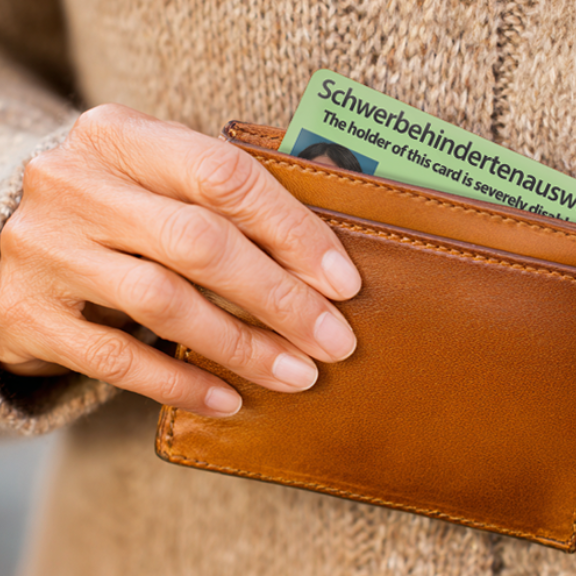
Applying for a certified disability rating means having your health limitations officially recognized. In Germany, a formal assessment notice (Feststellungsbescheid) can be issued starting at a disability rating (GdB) of 20, and from a disability rating (GdB) of 50, you are legally considered severely disabled and receive a severe disability ID card (Schwerbehindertenausweis). Having a disability rating for depression comes with various compensatory measures and advantages. At the same time, it is important to be aware of potential disadvantages and personal implications before taking this step.
Advantages of a Disability Rating for Depression:
- Financial Relief: Starting at a disability rating (GdB) of 20, you are entitled to flat-rate tax deductions—fixed amounts that are deducted directly from your taxable income, which increase with a higher disability rating.
- Workplace Protection: From a disability rating (GdB) of 30, you can apply for "equal status" (Gleichstellung). From a disability rating (GdB) of 50, employees receive enhanced protection against dismissal and up to five days of additional paid vacation. Furthermore, integration services can assist in adapting your workplace environment.
- Daily Support and Mobility: Discounts on public transportation, as well as reduced admission fees for museums, cinemas, or public swimming pools.
- Early Retirement Options: With a higher disability rating, transitioning into retirement earlier may be possible under certain legal conditions.
- Accommodations in Education: Students or schoolchildren with a certified disability rating can request adjustments to exam conditions, such as extended testing time or a quieter examination environment.
Disadvantages of a Disability Rating for Depression:
- Bureaucratic Effort: Applying for a disability rating requires extensive documentation and medical records, a process that can be mentally draining.
- An Invisible Illness: Depression is often difficult for outsiders to see or understand, which can sometimes complicate the official recognition and assessment process.
- Privacy Considerations: If you choose to utilize the severe disability card or disclose your status to your employer to claim workplace benefits, you must be comfortable with your disability status being visible to them.
While the path to recognition can be time-consuming, the process can be made significantly less stressful with the right knowledge and support from counseling centers or social advocacy associations like the VdK (Sozialverband VdK Deutschland).
What Do I Need to Consider If I Want to Submit an Application?
If you are considering applying for a certified disability rating (GdB) for your depression, it can be an important step toward regaining a sense of control and autonomy. Unlike physical disabilities, applying for a disability rating for mental illnesses is often slightly more complex because the limitations are not immediately visible. For this reason, it is highly beneficial to involve specialist doctors and psychiatrists in preparing your medical reports, as they are thoroughly familiar with the legal definitions and medical classification systems.
Fortunately, the actual application process is more straightforward than many people realize:
- Step 1: Get a diagnosis. First, you will need an official medical diagnosis, for example from your general practitioner (GP) or psychiatrist.
- Step 2: Submit the application. Equipped with this diagnosis, you can file an application for the "determination of a disability" (Feststellung einer Behinderung) with your local pension office (Versorgungsamt).
- Step 3: Medical review. The office will typically contact your treating physicians directly to request the necessary medical files and documentation.
- Step 4: The decision. Once everything is submitted, it is a matter of waiting for the official decision. Depending on the federal state and the office's current workload, processing times usually range between three and six months.
Tip
It can be incredibly helpful to keep a concrete log of exactly how your depression limits your daily life—such as instances of sick leave from work, experiences of social isolation, or difficulties managing chores at home.
Important Notes to Keep in Mind:
- Temporary Validity: A disability rating is frequently issued on a temporary basis at first, typically valid for 2 to 5 years.
- Permanent Status: In cases where the condition follows a chronic and long-term course, permanent recognition without an expiration date is also possible.
- Re-evaluations: Health improvements achieved through therapy can potentially lead to a lower disability rating or a withdrawal of the status. A reassessment often takes place after a designated "probationary healing period" (Heilungsbewährung), which typically lasts around 2 years.
If you would like to read further on this topic and explore all the necessary steps, forms, and local contacts, you can find detailed resources through the pension office of your respective federal state, as well as on websites of social advocacy groups like the VdK (Sozialverband VdK Deutschland e.V..)
While a certified disability rating for depression can provide meaningful relief and lower bureaucratic hurdles, it is never a replacement for professional treatment or psychological support. Especially during highly stressful phases, securing early professional help from doctors or psychotherapists remains essential.

Conclusion: Making the Invisible Visible with a Disability Rating
A certified disability rating (GdB) for depression is never a sign of weakness. Instead, it is a meaningful step toward making your hidden challenges officially visible and securing concrete support for your daily life. It can help protect your employment, unlock financial relief, and allow you to better manage everyday hurdles. Even though the application process can sometimes feel bureaucratic and time-consuming, it is well worth knowing your rights and seeking guidance from counseling centers or social advocacy organizations. By doing so, you can build a stronger foundation of stability and security for your future.